
WAYNE ZHANG, DP
Wayne Zhang is a cinematographer whose work moves between independent films in the United States and feature productions in China. He approaches cinematography with an understanding of storytelling, atmosphere, and composition, drawing on both its technical and artistic sides. His work focuses on using light, contrast, color and camera movement to communicate emotion and meaning while collaborating closely with directors, designers, and the wider production team.
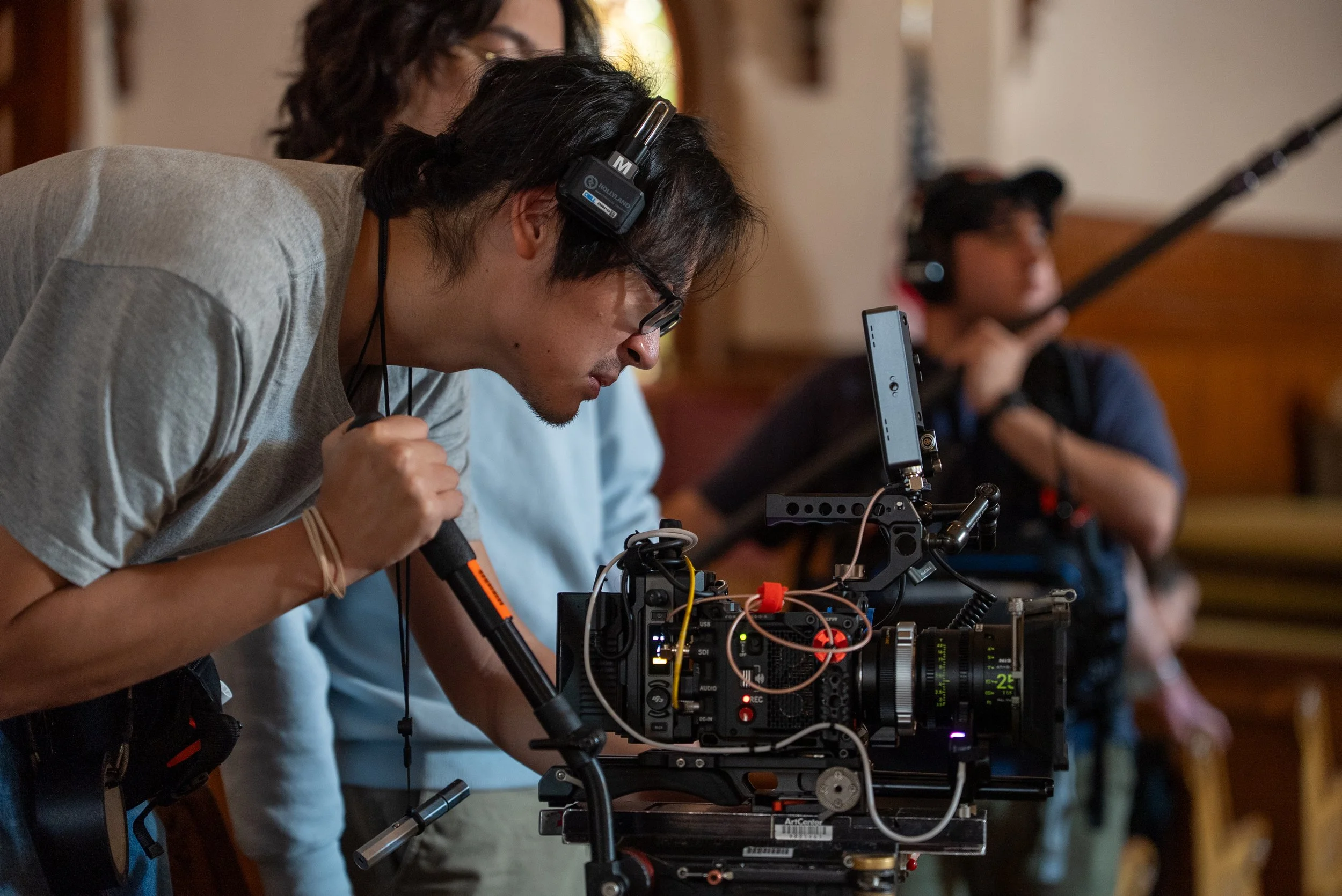
* As a part of our campaign to raise awareness about child exploitation, interviews with the cast and crew of ‘All Hail The King’ will be released until the campaign ends 11.12.2027 *
A cinematographer, also known as a director of photography, is the person responsible for translating a film's story into visual language on set. They shape how a movie looks by making decisions about camera selection, lens choice, framing, camera movement, exposure, and lighting while working to serve the tone and emotion of each scene.
They usually lead the camera and lighting departments, working with the camera operators, gaffer, and grip team, and coordinate closely with the director, production designer, costume department, and colorist in post. Their goal is to capture images that feel both authentic and cinematic, supporting the story without pulling the audience out of it.
Wayne Zhang is a cinematographer whose work moves between independent films in the United States and feature productions in China. He approaches cinematography with an understanding of storytelling, atmosphere, and composition, drawing on both its technical and artistic sides.
His work focuses on using light, contrast, color and camera movement to communicate emotion and meaning while collaborating closely with directors, designers, and the wider production team.
Interviewer: What pulled you toward cinematography in the first place?
Wayne Zhang: For me, it was always about storytelling. When I watched movies, I found myself most attracted to the visual side of filmmaking. I wanted to use visual language to tell stories. I enjoy both the more technical side of cinematography and the artistic side. To me it's about using images to communicate emotion and meaning.
When I first started, I wanted to become a director, but struggled to deal with screenwriting. Even as a kid, around nine years old, I loved taking pictures. Eventually I realized cinematography combined both photography and movie-making. I could tell stories through images, and I found that I really enjoyed creating visual compositions. So I decided being a cinematographer was the path I wanted to follow.
Eventually, I studied television broadcasting for my undergraduate degree. After that I spent a year at Vancouver Film School before going to ArtCenter College of Design’s MFA program for my graduate degree.
Interviewer: How different was studying broadcasting compared to Vancouver Film School?
Wayne Zhang: Broadcasting focused mostly on television news and TV programming. We did work with cameras and lights but Vancouver Film School was completely different because it was centered on making films. It was very hands-on. We learned how to build contrast-filled lighting setups, high-key and low-key lighting, and how light can communicate emotion and support the story. We learned operate cameras, and create cinematic images.
The instructors taught me a great deal.
Interviewer: When you first read the script for All Hail the King, and you imagined the visual language of the film, was it similar to what audiences will see now?
Wayne Zhang: Oh yes, I think it's very similar. The film has a strong film noir influence. And even though the story is grounded in reality because of the criminal case and the semidocumentary of it all, there are many genre elements throughout the narrative.
At times, it’s a journalistic thriller, others it’s more about the interpersonal drama, at times it feels like a horror film. I wanted the cinematography to reflect that. It needed to feel authentic while also embracing the power that the tools of cinematography gives us, so we went with a darker, more stylized visual language with low-key lighting and strong contrast.
In many ways, it still feels like the other films Andre and I made. (Wayne Zhang and Andre Machado collaborated on multiple projects through the INSIDIOUS FACTORY FILMS brand, including ‘The Unforgivable Act’ (2023),‘Hatman’ (2024) and ‘Let Me Ask You Something’ (2025). You can take a look at them here.)
Interviewer: What camera did you choose for principal photography on the narrative sections, and why?
Wayne Zhang: We used the DJI Ronin 4D for most of the narrative section of the film.
Interviewer: What made you choose that camera specifically?
Wayne Zhang: Efficiency was the biggest reason. The Ronin 4D gave us a lot of flexibility. We could move quickly between stabilized handheld shots, tracking shots, and movements that looked almost like they were done on a dolly. It’s a great camera. It allowed us to achieve cinematic camera movement without slowing production down. As we were making this film independently and under a very demanding schedule, it absolutely was the right choice.
Normally I use RED or ARRI cameras as the main cameras and the Ronin 4D as a B camera. RED has certain advantages in color science and dynamic range. But for All Hail the King, efficiency was the priority. It’s funny because on this project the Ronin 4D became the A camera and the RED became the B camera. (Multiple scenes in the narrative and documentary sections were filmed using a RED KOMODO-X).
One of the inspirations for ‘All Hail The King’ was Michael Mann’s work. Some of those films show how digital cinematography creates its own powerful cinematic language. Our DJI camera produced some beautiful images.
Interviewer: Much of All Hail the King consists of interview conversations. How different is your approach when shooting two people talking in a room compared to larger cinematic set pieces?
Wayne Zhang: Balance comes to mind. Even when you have two people talking, I still want the film to carry a certain mood and tone while remaining grounded in reality. You have to balance naturalism with carrying a style. It's about making everyday conversations feel cinematic without becoming unrealistic.
Interviewer: How important are costumes, production design, and makeup to your work as a cinematographer?
Wayne Zhang: In some ways they're even more important than cinematography itself because they make the world believable. If the costumes, locations, and production design don't feel authentic, audiences won't believe the story. Production design, costumes and make up are what gives the cinematographer something meaningful to capture.
Interviewer: How important is deciding on a color palette before production versus discovering it while shooting?
Wayne Zhang: Planning ahead is very important because it makes the film feel visually consistent and professional. On independent productions we don't always have the time or budget to refine every detail, but we still spent a long time discussing the visual concept before filming.
You have to be intentional with what you’re visually communicating to an audience. With this film, production design, cinematography, props, and color all worked together to support the same vision.
Interviewer: After working with many directors, especially film students, what are some of the biggest mistakes you've seen directors make? And what mistakes do cinematographers make?
Wayne Zhang: Actually, I wouldn't really call them mistakes. They’re more like… regrets, if that makes sense? You learn not to make certain choices with experience. Every single film I’ve ever seen has things that could have been better.
For me, over time, I learned a lot of it is about having enough preparation. Knowing what you’re doing. Having more time for location scouting always helps you build stronger lighting plans. But independent films don't always have that luxury. I think if you ask every cinematographer in their world about their project, they will all say “I wish we had more time and money”.
Interviewer: When you think back on All Hail the King, what memories come to mind first?
Wayne Zhang: It's very personal because it was my last project in California. It's a really happy memory. We weren't making this film just because it was a school assignment. We made it because we genuinely love filmmaking. The director and I and a lot of the crew members had worked together before. The crew enjoyed working together as friends, and that collaboration made the experience very special. It felt like everyone was giving it their all.
Interviewer: Do you have a favorite shot in the movie?
Wayne Zhang: Yes. It's one of the shots in the conference room scene. It’s actually from the first day of shooting. There’s this over-the-shoulder shot behind Calvin, pointing at actor Ray Buffer. I really like that composition. It's very organized visually, and the strong contrast worked really well. Our production designers, Syd Shen and Jane Hamor did a great job at making the most out of that location.
Interviewer: You've worked on many projects in China, including feature films. How does filmmaking there compare with making independent films in the United States?
Wayne Zhang: The American film industry is much more organized because of the union system and the professional infrastructure. China doesn't have the same traditions in that regard. In many ways, there’s a lot more chaos. On the other hand, filmmaking in China is much less expensive. Renting cameras, hiring equipment, and putting together productions is significantly cheaper than it is in the United States, especially for independent filmmakers.
It's also easier to obtain permits in many situations. For independent productions, filming can often be much easier because the overall costs are lower.
Interviewer: What advice would you give your younger self? And what advice would you give someone who wants to become a cinematographer?
Wayne Zhang: Be patient. That's the most important thing. Be patient on set, be patient in daily life, and be patient while building your career. There are times when you won't have much work, but you should keep learning, keep watching films, and keep improving your craft. Stay passionate and trust the process. Patience is one of the most important qualities a cinematographer can have.
You can check out some of Wayne’s work here.
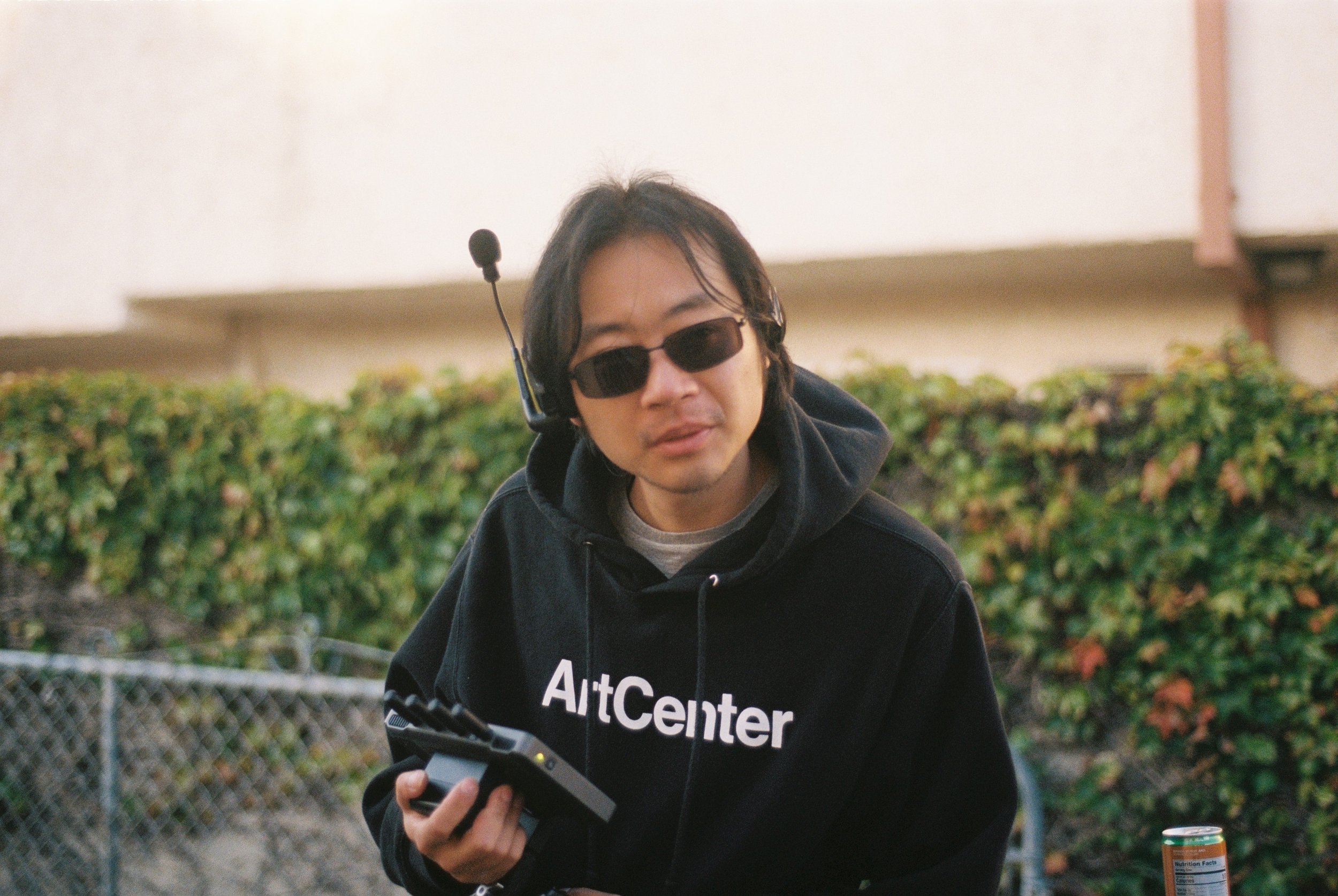
WAYNE ZHANG on set.

IVAN BERNAL - SOUND MIXER
Ivan Bernal is a Los Angeles-based production sound professional working as a sound mixer, boom operator, and utility sound technician. He approaches production sound with an understanding of performance, atmosphere, and storytelling. His work focuses on capturing clear, natural location audio while collaborating closely with directors, actors, and the wider production team.
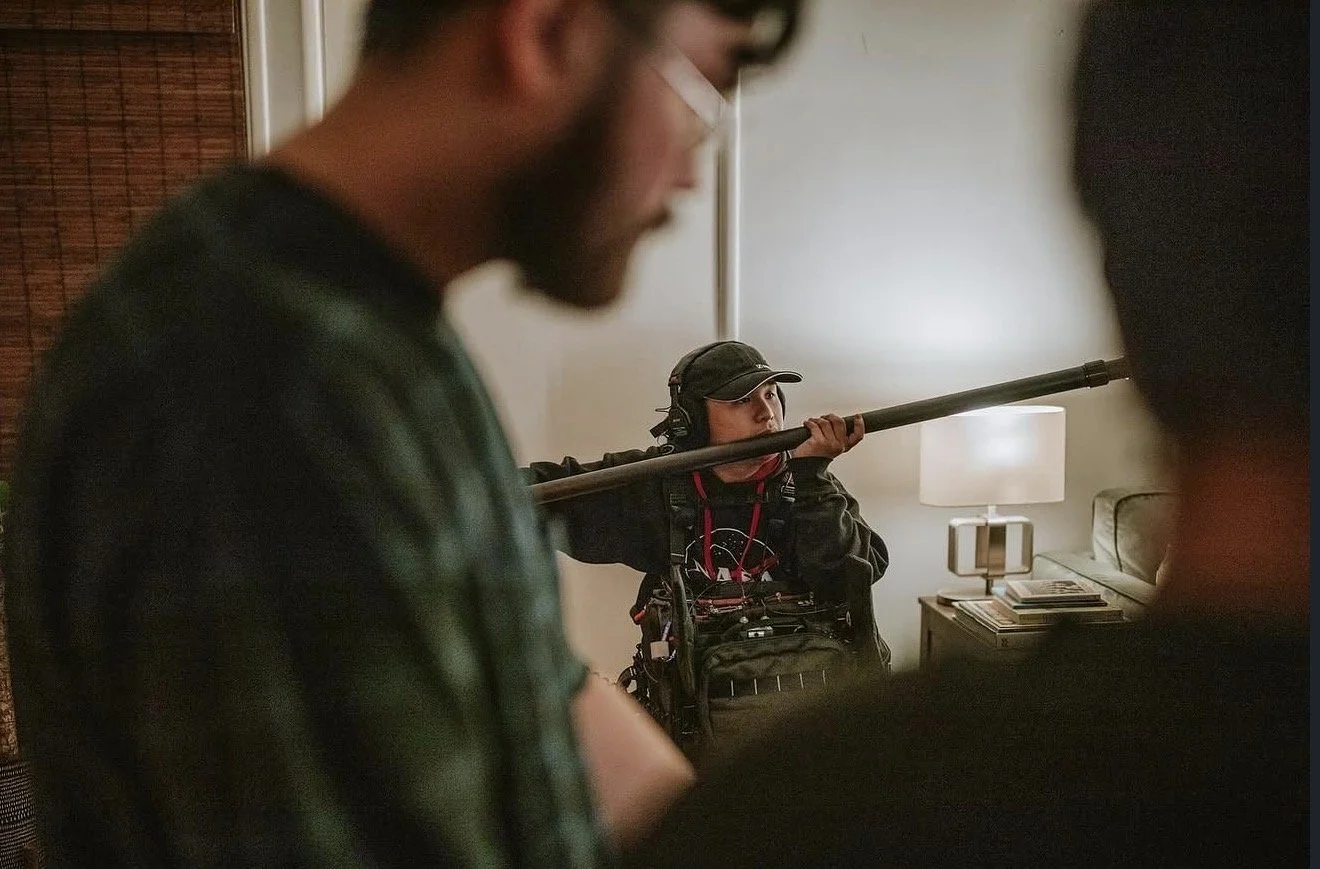
* As a part of our campaign to raise awareness about child exploitation, interviews with the cast and crew of ‘All Hail The King’ will be released until the campaign ends 11.12.2027 *
A production sound mixer is the person responsible for recording clean, usable audio on set during filming. They capture dialogue using boom microphones, lavaliers, wireless systems, and a field mixer or recorder while monitoring levels, background noise, interference, and microphone placement.
They usually lead the sound department, working with the boom operator and sound utility technician, and coordinate with the director, camera team, wardrobe, and post-production sound team. Their goal is to deliver dialogue and location sound that requires as little repair or replacement as possible later.
Ivan Bernal is a Los Angeles-based production sound professional working as a sound mixer, boom operator, and utility sound technician. He approaches production sound with an understanding of performance, atmosphere, and storytelling. His work focuses on capturing clear, natural location audio while collaborating closely with directors, actors, and the wider production team.
Interviewer: How did you get your start as a production sound mixer?
Ivan Bernal: I went to the New York Film Academy. I attended the campus in Burbank. I got into sound because, when we were students, we had to crew up together and make our own assignments. Nobody really wanted to do sound, so I picked it up and thought, "Hey, this actually seems kind of fun and interesting."
It worked out nicely because everyone else wanted to do something different, and I was one of the few people who genuinely liked doing sound. So people just kept calling me back. There was a general feeling that I had found the right role. I felt like I fit well within the whole crew process. I knew what I could offer and how I could contribute toward making a collaboration come together.
Interviewer: Did most of your training came from film school or from working on set?
Ivan Bernal: I'd say it's about fifty-fifty. The early work in film school definitely helped open the door and get me started. But the other fifty percent came from putting in the work outside of class: researching, reading guides, studying on my own, then applying that knowledge on set. A lot of it is just experimenting. You see what works in one environment, and if it doesn't work, you figure out a better approach for the next one. Technically, my degree was in directing. But I found directing to be pretty stressful.
Interviewer: What are the biggest mistakes you see student filmmakers make when it comes to sound?
Ivan Bernal: One thing they could definitely improve is microphone placement. It's something you're constantly learning because every costume is different and every situation is different. Sometimes you can mic someone up easily, and sometimes you can't.
The other thing is realizing that sound is fifty percent of the movie. Audiences can forgive visuals a little bit, but bad sound immediately pulls people out of the experience. It can completely ruin the immersion. When sound is done well, it's almost invisible. Producers and especially film students sometimes take the recording process for granted.
Interviewer: Would you say there were any moments on All Hail the King that really stood out to you?
Ivan Bernal: It was packed. We were trying to do a lot. Every production is different. Some sets are more relaxed and casual, while others are much more structured. A tighter schedule naturally creates a different environment.
One of my favorite memories was shooting the main interview scene in that really nice house we rented. Recreating them and getting to play around with that story was a lot of fun.
Interviewer: If you could give one piece of advice to your younger self starting out, what would it be?
Ivan Bernal: I'd tell myself to think smarter about what gear to buy and what gear to sell. It's better to invest in reliable equipment right away because you know you can trust it. And if you ever need to move on from it, quality gear also holds its value better. Good equipment isn't everything, but in sound it really helps us do our jobs more efficiently. There are already so many variables to worry about. You don't want your gear to become another one.
Interviewer: From your experience working on so many productions, how do you approach professionalism on set?
Ivan Bernal: Overall, I think it's about maintaining a positive attitude and knowing when it's time to be serious and when it's okay to relax more.
More importantly, it's about being present. You're constantly listening, not just to the sound you're recording, but to what's happening on set. What do people need? How does it sound? Can we skip something? Can we solve this another way? Being aware of the environment.
Interviewer: Do you mostly work on narrative projects, or do you do more commercial work?
Ivan Bernal: I think I mostly end up doing narrative work. That's just where I seem to get booked the most.
I've done smaller commercials and promotional projects too, but narrative has really become my bread and butter. I'm not against either one. At the end of the day, it's all work that helps pay the bills and lets me continue doing what I love. One of the things that originally inspired me was actually the blooper reel at the end of Rush Hour. Everyone looked like they were genuinely having fun making the movie. That's the kind of set I always want to be part of.
Interviewer: Is sound your full-time career, or do you balance it with other work? What's the reality of freelancing as a production sound mixer in Los Angeles?
Ivan Bernal: Production sound is definitely my primary occupation. Most of my work is production sound mixing, although I can also boom operate or work as a utility technician, even though I haven't done as much of that lately.
I'd like to explore more post-production sound eventually, but honestly, I have more fun being on set. It gets me out of the house, lets me meet interesting people, gives me unique experiences, and lets me help tell stories.
As for the market, because production sound is a fairly specialized field, we're actually a pretty close community. We help each other out. We have meetups. We pass work to one another. There's a real sense of collaboration.
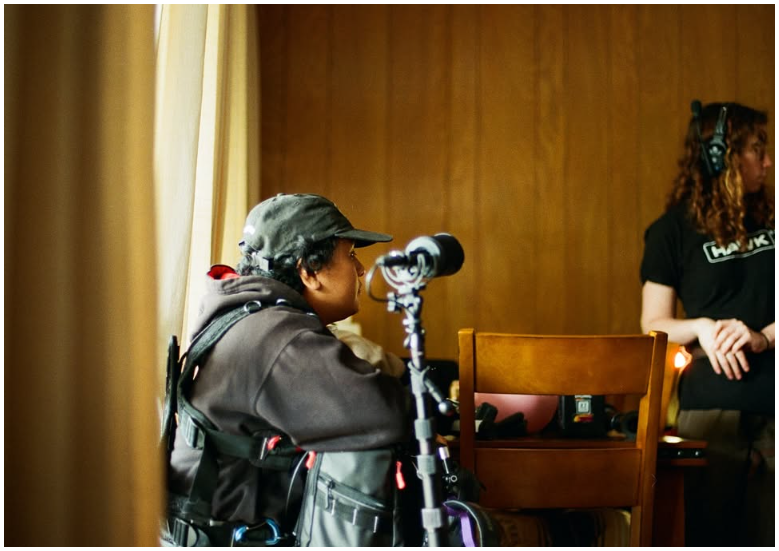
IVAN BERNAL on set.

CRYSTAL JUAREZ, PRODUCER
Crystal Juarez is a Los Angeles-based producer and director who came up through East LA College and quickly built a reputation by taking on gig after gig across nearly every crew position. She approaches producing with an understanding of both the creative and logistical sides of filmmaking, drawing on her experience directing her own projects. Her work focuses on organizing the details that hold a production together while collaborating closely with directors, crew, and the wider team.
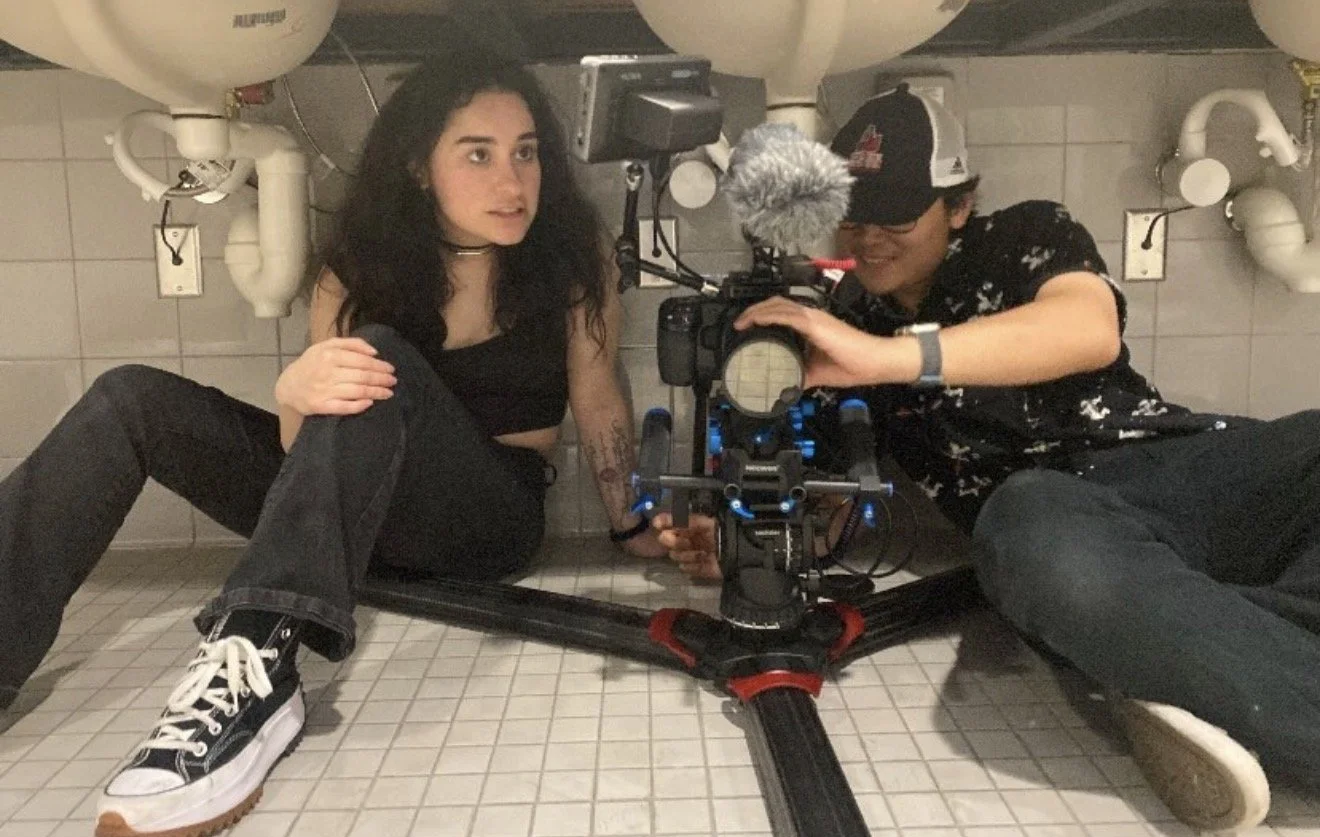
* As a part of our campaign to raise awareness about child exploitation, interviews with the cast and crew of ‘All Hail The King’ will be released until the campaign ends 11.12.2027 *
A producer is the person responsible for making a film actually happen. They handle the logistical and organizational backbone of a production, securing locations and permits, building the schedule, managing the budget, coordinating crew, and solving the countless problems that come up before and during a shoot.
They are usually one of the leading forces on a production, working alongside the director and director of photography while coordinating with every department on set. Their goal is to put all the pieces in place so the crew can do their best work and the director's vision can make it to the screen.
Crystal Juarez is a Los Angeles-based producer and director who came up through East LA College and quickly built a reputation by taking on gig after gig across nearly every crew position. She approaches producing with an understanding of both the creative and logistical sides of filmmaking, drawing on her experience directing her own projects. Her work focuses on organizing the details that hold a production together while collaborating closely with directors, crew, and the wider team.
Interviewer: How did you get into film producing?
Crystal Juarez: I've always wanted to be a filmmaker. I started out at East LA College and took a couple of film classes. I took one class and immediately fell in love with it. Right after the beginning class, I actually took the advanced class at the same time as the beginner class. I just dove right in.
I also did a lot of shadowing with my professor, who was a DP on a ton of shows in the '90s and still works as a cinematographer here and there. He DP'd episodes of 1000 Ways to Die and I think he also worked on Top Gear.
He taught us a little bit of everything. He wanted us to learn every crew position so we could figure out what we liked. Even if we didn't end up loving a role, we'd still be qualified to work in it. I just fell in love with filmmaking, found my calling in directing, and immediately after those first couple of semesters I started taking on a ton of gigs outside of school, as well as directing my own projects.
Interviewer: Was a specific moment where you realized, "I think this is what I want to do?"
Crystal Juarez: Yeah, actually. I remember it was maybe around the third month of that semester. I was working about 19 hours a day, six days a week. I was doing so many films.
I think I worked on something like 23 films in three months. It was insane. By the end of it, I was barely sleeping. I hardly had any time for myself, but even then it still wasn't enough. Even though I was exhausted, I wanted to keep making more films. I wanted to keep working. That's when I realized that even though I was incredibly busy and never home, this was something I could do for the rest of my life without getting tired of it.
I knew this was truly my calling. I'm an artist in a lot of different mediums. But none of them make me feel the way filmmaking and being on set does.
Interviewer: For people who hear the word "producer" but have no idea what that actually means, how would you describe what a producer does?
Crystal Juarez: I think a lot of people hear "director" and assume that's the person who makes or breaks a film but that's also true of a producer. To me, while the director is focused on the creative elements and bringing their specific vision together, the producer is doing all the behind-the-scenes work that often doesn't get recognized. They're handling permits, paperwork, location scouting alongside the director and DP, organizing logistics, and making sure everything is in place for the film to happen.
They're one of the people who solve problems in order to make the film. As one of the leading forces, they know every detail about the production, the crew, and what needs to happen in case of emergencies. They're essentially one of the managers of the entire team.
Even directors rely on producers. The creative vision simply can't happen without them. And vice versa.
Interviewer: What's one part of producing that audiences never see but can make or break a project?
Crystal Juarez: Scheduling is a huge one.
If you watch a movie and it feels rushed or like certain shots are missing, a lot of that comes back to production.
On the other hand, if everything feels polished and seamless, it's because the producer put all of those pieces together. The only reason you have a location is because the producer secured it. The only reason permits are in place is because the producer handled them. The only reason everyone shows up on time and the production runs smoothly is because the producer spent countless hours making sure every detail was taken care of.
All that behind-the-scenes organization is what allows the crew to do their best work.
Interviewer: How did you get involved with All Hail the King?
Crystal Juarez: I already knew the director, Andre. He first hired me on one of his school short films a few years ago. I came in as First AC about a week before production.
The film was called Hatman, and it was a really cool psychological horror short. (You can watch it here).
After that, I guess he liked my work because he kept bringing me back on a couple more productions as an AC. We collaborate with some of the same people. Then, about a year or two later, he told me he wanted to make a semidocumentary inspired by controversial celebrity allegations but this time, he wanted me to work as a producer.
I thought it was a really interesting concept and a unique way of exploring the darker side of Hollywood. Even though the film uses fictional elements, I thought it had something meaningful to say. He told me he trusted me because of how I handled my own productions.
Interviewer: Are there any memories that stand out that from this project?
Crystal Juarez: I got to hire some of my own crew members, people I've worked with for years. I brought on our makeup artist, First AC, and some grips. Working with friends you're comfortable with always makes production more enjoyable, but it also allows for more efficient communication on set. In some ways, it’s similar to playing with others in a sports team.
Another thing I'll remember is filming at that beautiful house. It wasn't exactly a mansion, but it felt like one. It was such an incredible location, and the owner was really kind. We got some amazing shots there. Even though production is inherently chaotic, this was the fun kind of chaos. Everyone was working so hard towards the same goal, and that energy was really exciting.
I also really enjoyed working with the child actors. It was only my second time working with kids on set, and they were incredibly professional. Everybody did such a fantastic job.
There was a real feeling of accomplishment. There are honestly so many memories from that production that I'll always keep with me.
Interviewer: If you could give one piece of advice to your younger self, or to someone who wants to become a producer, what would it be?
Crystal Juarez: To my younger self, I'd say: if you want to make something, just make it. Who cares if it comes out bad? Who cares if you don't have the perfect crew? If all you have is a phone camera, then shoot something with your phone.
Every project teaches you something. If filmmaking is your dream, give it everything you've got. Don't let relationships, heartbreak, friends, or partying get in the way of what you really want.
To anyone who wants to become a producer, or work in film in general, I'd say don't listen to the people who tell you it's impossible.
People will say you can't do it in this economy, but you absolutely can.
You can be broke and still make films. You can work two or three jobs like I did and still make films.
You'll always find time if it's truly important to you. Don't let anyone convince you otherwise.
Interviewer: Where can people check out your work?
Crystal Juarez: You can follow me on Instagram at @miss.pale_crystal. You can also check out my Spotify under Crystal Ruby, and my YouTube channel, also under Crystal Ruby, where I'll be posting future projects.
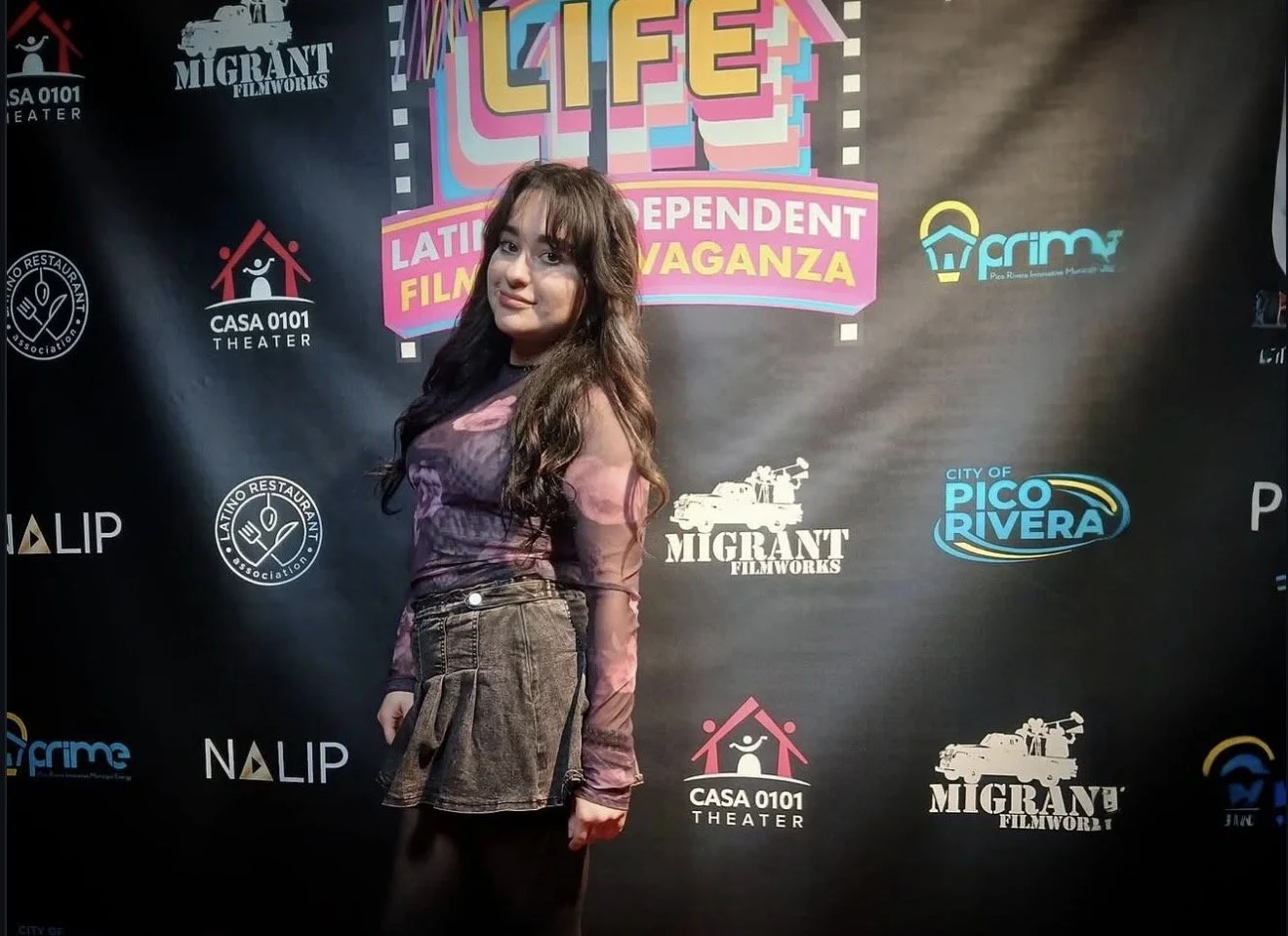
CRYSTAL JUAREZ at the Latin Independent Film Extravaganza Festival.

RAHUL UPPALURI, GAFFER
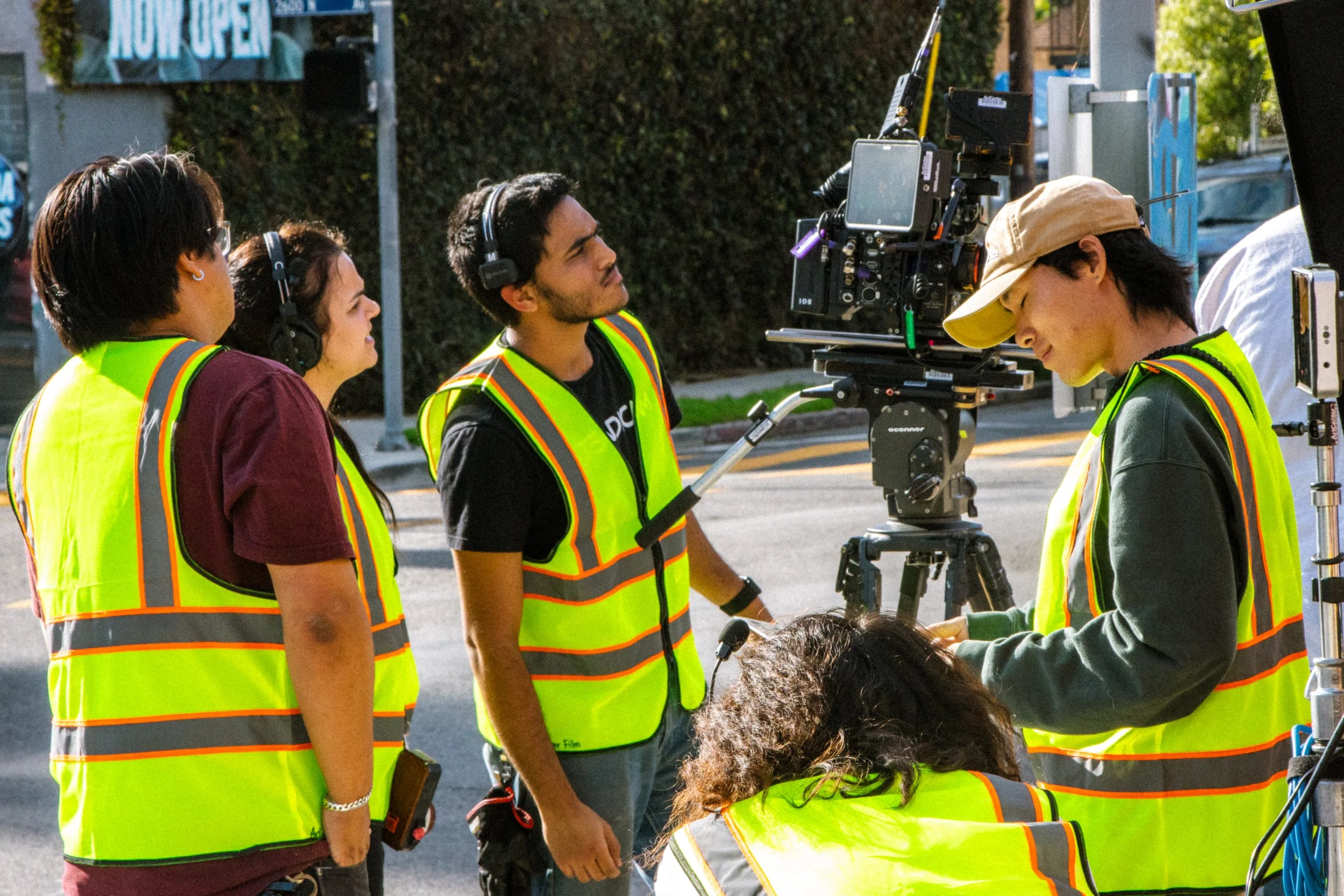
* As a part of our campaign to raise awareness about child exploitation, interviews with the cast and crew of ‘All Hail The King’ will be released until the campaign ends 11.12.2027 *
A gaffer, also known as the chief lighting technician, is the person who leads the electrical and lighting department on a film set.
They work closely with the cinematographer to translate the desired look and mood into practical lighting setups. The gaffer oversees the crew, equipment, and technical decisions needed to execute that lighting safely and effectively.
Rahul Uppaluri is a cinematographer, gaffer, and editor whose work spans both the camera and electrical departments. He studied at ArtCenter College of Design, graduating in 2026, where he developed his approach to visual storytelling through lighting, composition, and cinematography.
INTERVIEWER: How do you describe the job to people who don’t know what you do?
RAHUL UPPALURI: Traditionally, the cinematographer, or director of photography, works with the gaffer and explains to them the kind of lighting they want. All the decisions that come with achieving that lighting are partly the responsibility of the gaffer, or Chief Lighting Technician.
INTERVIEWER: How did you end up finding yourself in this position?
RAHUL UPPALURI: I work mostly as a cinematographer, and I enjoy working with lights, shadows, and images. I also really enjoy translating abstract emotions and feelings into something more concrete, which is light and shadow. So working as a gaffer on sets is a natural extension of that. It allows me to focus on one aspect, which is lighting, and really hone my craft in that.
Being a gaffer also allows me to peer into the process of my peers and fellow cinematographers. I only work with cinematographers who I admire, and gaffing for them is a way for me to explore my own craft and also find out what my peers are doing.
INTERVIEWER: You grew up in India, right?
RAHUL UPPALURI: I did.
INTERVIEWER: What was the perception of being a film student there?
RAHUL UPPALURI: In India, the role of a cinematographer is not as well known or celebrated. Indian films would be marketed on the status of the star, the music, and the melodrama, which is not necessarily a bad thing. It’s slowly changing, and there are a few exceptions. There are a few famous cinematographers, or “cameramen,” as they’re sometimes colloquially referred to.
But obviously, I was met with a lot of resistance when I approached my parents and told them that I wanted to go to film school. Being Asian parents and all, they wanted me to pursue a safe career, like being a doctor, engineer, or lawyer. My father was convinced that I wanted to go to film school because I wanted to skip out on working hard and studying.
What convinced him was that I did well in high school, and I got a letter of recommendation from the principal of my school at the time. That also landed me an internship at a local TV station.
I’d also been a child actor, so I had a few contacts from my time doing that. Eventually, I was able to convince my parents to let me go to film school.
INTERVIEWER: Was there a specific film that made you pay attention to cinematography?
RAHUL UPPALURI: I would have to say The Coen Brothers’ No Country for Old Men. Watching that for the first time, it was simple, yet so beautiful, and it never takes you out of it.
I don’t think I can think of one single shot that stands out in that film. It really is a comprehensive piece. I was very taken by it.
INTERVIEWER: No Country for Old Men was shot on 35mm film by cinematographer Roger Deakins. Have you had a chance to shoot with celluloid?
RAHUL UPPALURI: In my own practice, I shoot a lot of still film, and I’ve also worked in a photography developing lab. I’ve shot a project on 16mm film, and I’ve served as a gaffer for numerous projects that were shot on celluloid. So celluloid has been a great love affair.
INTERVIEWER: How would you say practicing still photography impacts your work as a gaffer and cinematographer?
RAHUL UPPALURI: Still photography offers a more accessible route to engage with all things cinematography and lighting.
Essentially, being a cinematographer is not too dissimilar to being a photographer, because you’re essentially taking 24 still pictures per second, and when they’re played in motion, it creates the illusion of motion.
Practicing still photography lets you zero in on the still frame. That is very freeing in a lot of ways because you don’t have to deal with motion, but it also comes with its own challenges because you only have that one frame to express whatever you want to express.
INTERVIEWER: How do you land gigs as a gaffer on sets here in L.A.?
RAHUL UPPALURI: I’d say I’ve been lucky to work with many talented individuals who are working often. I’ve tried some job boards like Mandy and Nova, and while they might be good, the most fulfilling jobs I’ve gotten have been through word of mouth.
INTERVIEWER: I assume that working as a gaffer, there are times where there’s conflict between the gaffer with the cinematographer and the director. What’s that dynamic like?
RAHUL UPPALURI: Obviously, we’re all different people, and we might have different solutions to the same problem. As artists, all of our tastes differ. I have my own taste, and the cinematographer I’m working with might not share my taste in a particular scenario.
I always approach creative conflicts like these with humility and acknowledge the fact that it’s a difference in taste, and there’s no right and wrong in art. It’s subjective a lot of the time.
When I’m working as a gaffer, especially, I always give precedence and priority to the cinematographer’s wishes. And when I’m a cinematographer, I give priority to the director’s wishes.
When there’s a disagreement, I’ll respectfully let them know my opinion in a way that’s not conflicting, but rather coming from the point of view of collaboration.
A lot of the time, I find that when we have a conflict and approach it as a discussion rather than a fight, we reach a middle point that takes us to a place that neither of us originally envisioned. I usually end up liking that more than my original opinion that caused the conflict in the first place.
INTERVIEWER: When you got to film school, did you already know you wanted to be a cinematographer?
RAHUL UPPALURI: When I got to film school, I was torn between wanting to be a cinematographer or an editor. I really enjoyed both of those things.
I definitely knew I didn’t want to be a director. I didn’t particularly enjoy the process of directing actors. That’s not to take anything away from the craft, and I have immense respect for actors.
I believe that it’s the hardest job on set because they’re the most vulnerable and have the most to lose. They’re the ones who have their likeness on the line.
I really enjoyed the process of images, and I couldn’t separate myself from the frame. At the beginning of film school, obviously, you have to direct your own films and work as a director. Even when I was working as a director, I found myself really enjoying all the things that came with the frame: lighting, composition, camera movement.
When I was working with a cinematographer, I felt limited because I only ever wanted to do the job of the cinematographer. So I decided to make the jump.
INTERVIEWER: What do you think is the most challenging part of being a gaffer?
RAHUL UPPALURI: I’d say it’s working harmoniously with the vision of the director and cinematographer, and communicating that vision effectively to the electricians and grips who are actually achieving it.
Also, working under time constraints is a big challenge because lighting usually takes time. A lot of the time, especially with newer and less experienced filmmakers, they fail to account for the amount of time it takes to light something.
So figuring out ways to be more efficient and reduce the amount of setups is important. I’d say time, really, more than communication, is probably the most challenging part of being a gaffer.
INTERVIEWER: How does your preparation process differ when you’re working as a cinematographer versus as a gaffer?
RAHUL UPPALURI: Being a cinematographer, obviously, you have all the preproduction that comes with it. You’re working with the director to create shot lists, working with the assistant director to schedule and make your days, and then working with the gaffer and your camera team to prepare the equipment lists.
Working as a gaffer is more limited. I’m mostly thinking about the lighting package and the grip package, and working with the director of photography and sometimes production to get the lights and gear that we need to make our day.
INTERVIEWER: What’s most of the work you’ve been doing these days like?
RAHUL UPPALURI: Most of it has beem independent commercial work or independent short narrative pieces. I’m not really working on a lot of student films, unless it’s my friends and I’m helping my friends out.
I also do lighting for photo shoots, so there’s been a bunch of those gigs.
INTERVIEWER: How did you get involved with All Hail The King?
RAHUL UPPALURI: Through the director of photography, Wayne. He had been a good friend of mine, and he contacted me offering this project. We went to film school together.
I’d actually never worked with him in the capacity of a gaffer. Wayne had actually gaffed something that I had shot. But I’d always admired his work, and wanted to work with him. So I jumped at the opportunity.
I believe the first day was in an office building. I was there for every major shooting day and I had the same position throughout, to the end. Even in the later shooting dates.
INTERVIEWER: What memories from this shoot do you think you’ll carry with you in the future?
RAHUL UPPALURI: The people I got to work with. I met one of my best friends James McEntee (a Los Angeles-based cinematographer who worked in multiple positions on our production) on this shoot.
INTERVIEWER: What films have you seen recently that you feel have spoken to you?
RAHUL UPPALURI: The Invite, with Olivia Wilde, Edward Norton, Penélope Cruz, and Seth Rogen. I thought that was really well executed.
Also, the horror hits Obsession and Backrooms. It’s great to see what young filmmakers can achieve. I have a lot of friends who worked on Obsession and it’s also inspiring to see an independent production from Los Angeles, made on a budget of $750,000, get distribution, premiere, and make bank. Seeing it with an audience really gave me hope for the future of cinema.
INTERVIEWER: Do you think being a child actor impacted your relationship with cinematography?
RAHUL UPPALURI: Watching the inner workings of a set and being an actor is also why I have immense respect for actors and why I found it difficult to direct them.
I think it’s a really, really hard job to be that vulnerable and play these different characters, because you have to put yourself in really emotionally taxing situations.
I was in commercials, and I’d done a TV show. I played the lead’s younger self. I was in five episodes out of ten. I kind of fell into it. My mother was an executive producer, and I was hanging out in her office. The director had seen me and asked me to read for a part, and he really liked me. That’s how it started.
After that, I’d done some commercials, and then COVID hit, so there was a big pause in my gigs. I found that that life wasn’t for me, and I discovered photography. I discovered that that was something I enjoyed way more.
Even when I was on set as a child actor, I’d find myself talking to the cinematographer during lunch and having these conversations.
Also, from my time as an actor, I approach every script, whether I’m gaffing it or being a cinematographer, from kind of the lens of an actor, where the light, shadow, and camera are characters in the film.
I’m always trying to explore how the emotions and drama of the scene or the film can influence my work, in whatever position I’m in.
INTERVIEWER: Where can people find your work?
RAHUL UPPALURI: You can go to my website, follow me on Instagram, and hopefully people can see this film soon. It’s crazy.
INTERVIEWER: If you had one piece of advice to give to your younger self, who wanted to start filmmaking what would it be?
RAHUL UPPALURI: Talk to your peers. Talk to people.
When you’re starting out, especially, it’s easy to see your peers as competition. Earlier in my career, I would hesitate to reach out to them, even knowing that they might have skills that I could learn from.
Breaking through that perceived hierarchy has made me become a better artist and collaborator.
Follow Rahul on Instagram: @uppalurirahul and check out his website.
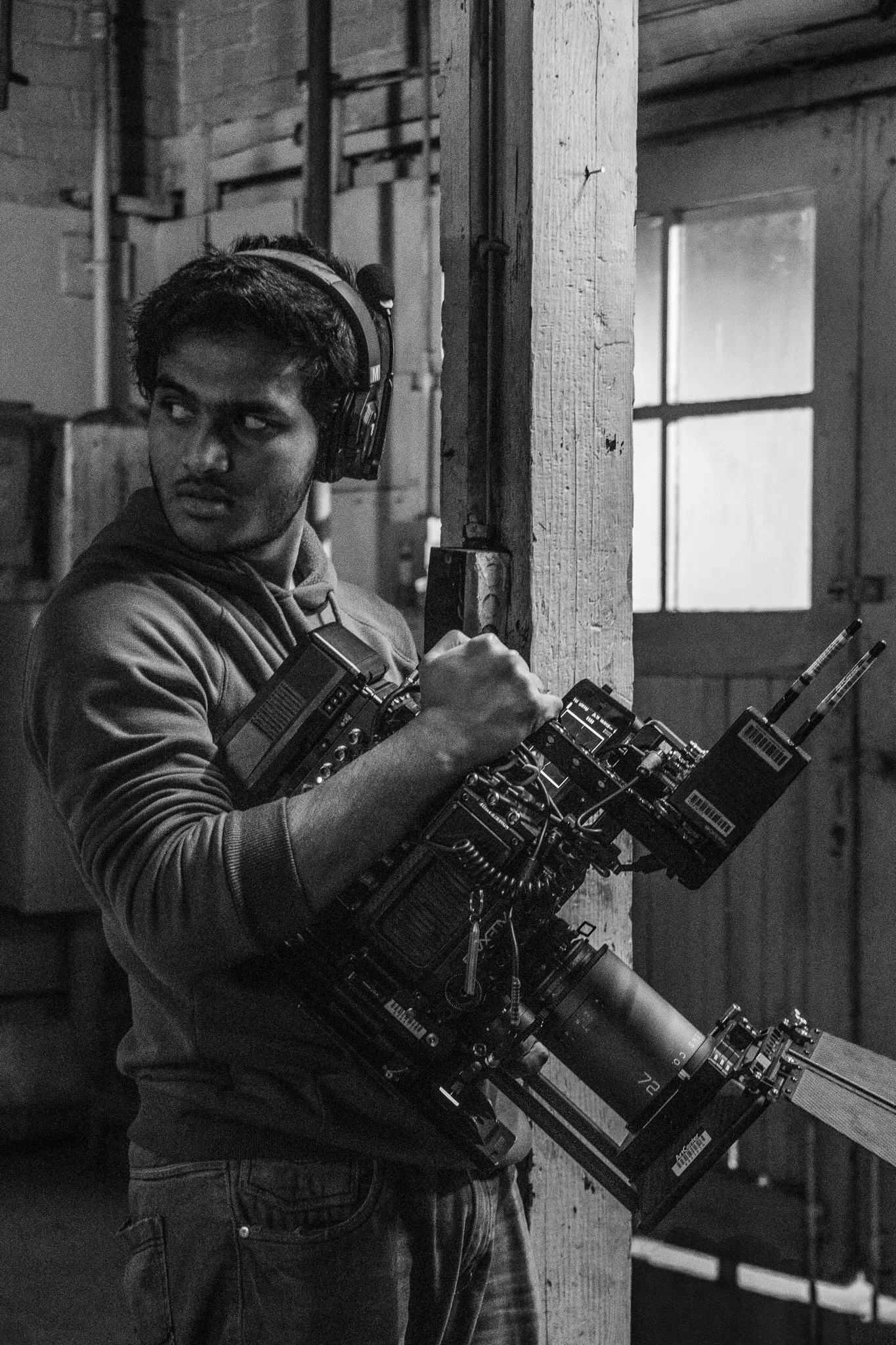
Rahul Uppaluri on set.

SYD SHEN, P.D
* As a part of our campaign to raise awareness about child exploitation, interviews with the cast and crew of ‘All Hail The King’ will be released until the campaign ends 11.12.2027 *
A production designer is responsible for creating and shaping the physical world audiences see in a film.
Working closely with the director and cinematographer, they develop the visual identity of locations, sets, props, furniture, textures, and other environmental details that help establish a story’s setting, characters, and time period.
On a film set, the production designer oversees the art department and develops the overall visual concept before other members of the team help bring it to life. Their work can be essential to making an audience believe that a contemporary location belongs to another decade or another part of the world.
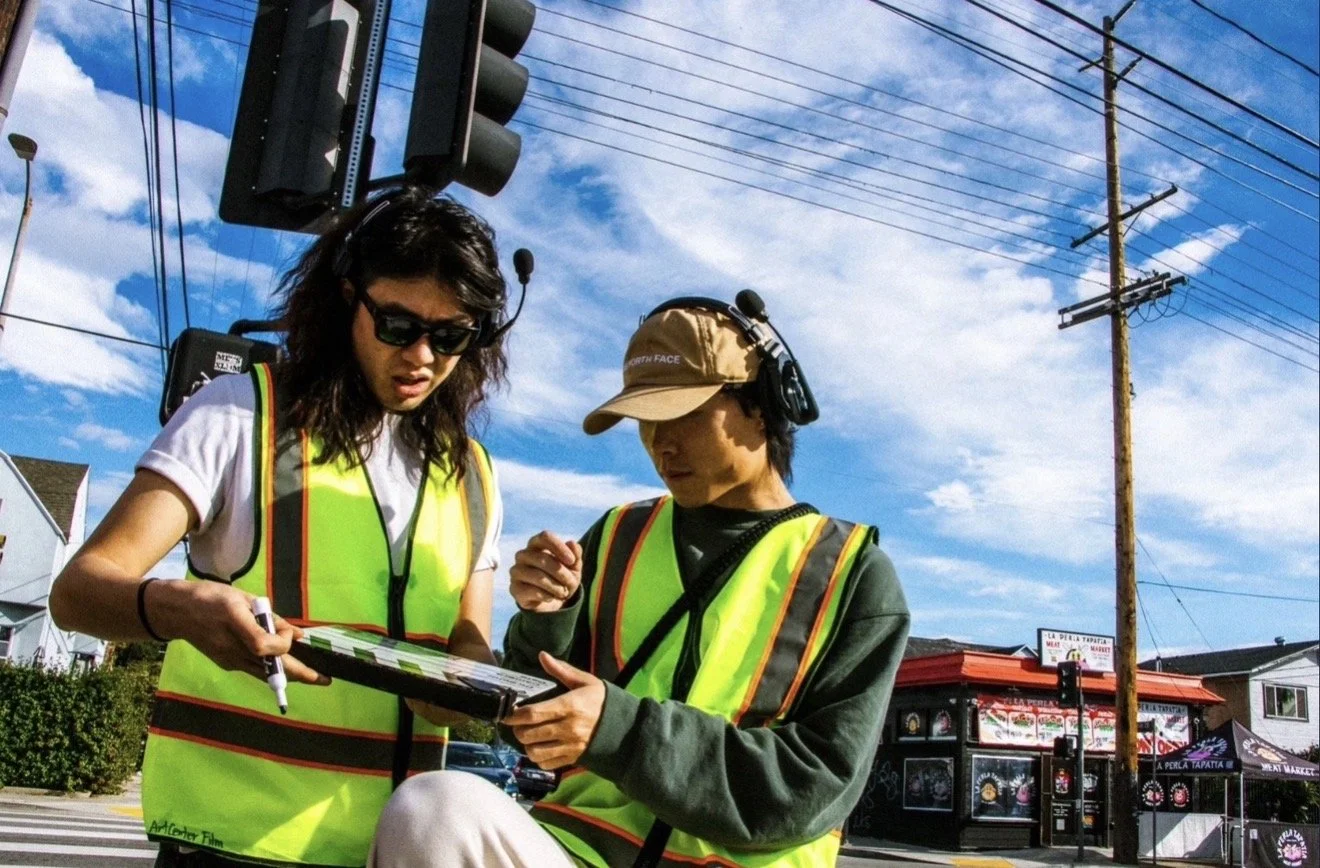
Syd Shen is a filmmaker, writer, and production designer whose work spans directing, assistant directing, and art department roles. His experiences working across different departments led him toward a growing interest in creating cinematic worlds.
For All Hail the King, Shen worked alongside production designer Jane Hamor to create environments that move across different periods while grounding the film’s fictional and semidocumentary elements in a believable reality.
Syd Shen: It happened pretty naturally. I originally came to ArtCenter because I wanted to direct. Before that, I was actually a professional writer. But when you’re in film school, you end up doing a lot of different jobs besides directing.
During my first year, I was doing basically whatever I could find. Writing, working on sets, being a first AD, all kinds of things. Eventually I started becoming interested in other parts of filmmaking, and production design became one of the biggest ones.
I’m also really interested in history, so once I started working on projects that involved recreating different periods, I thought, “Why can’t I do this?” It became something I really enjoyed, and eventually it became another profession for me.
Interviewer: Was Rosemead Motel your first job?
Syd Shen: Yeah, that was my first. The director and I talked about films and visual ideas a lot. She wanted to create something that felt like China during a particular period, but we were shooting it in the United States. So part of my job was figuring out how to recreate that Chinese environment and time period inside an American location.
Looking back at that film now, there are definitely things I would change. Things I would approach differently. But I think our understanding of the motel location and the way we transformed it worked pretty well.
Interviewer: Did working in other departments change you as a filmmaker?
Syd Shen: No matter whether you’re a production designer or a first AD, just being on set gives you a lot of experience.
Making a film isn’t only about writing a story or having theories about filmmaking. There’s a practical side to it. You have to work with people. You have to deal with real situations and understand how a set actually functions.
As a first AD, you’re moving around the entire set. You’re interacting with everybody, and you start understanding exactly what every department is doing. That’s really helpful when you eventually direct.
The same thing applies to production design. You’re constantly thinking visually. So when you’re directing your own project, you’re able to think like a production designer too. You understand another way of looking at the film.
All of those experiences help you as a director. All of these jobs are about creating the world that people see in the film.
Obviously the cinematographer is a huge part of what the audience ultimately sees too, but as a production designer, you’re creating the physical world that’s being photographed.
For me, production design is about world-building.
A lot of the time on independent films, you’re just working with what you have.
That’s actually a really valuable experience because you’re not always going to have a huge budget where you can build whatever you want from scratch.
Sometimes you walk into a practical location and ask, “What do we already have here? How can we make this come alive?”
Instead of building something completely new, the challenge might be figuring out how to transform a real location and make it feel like the 1980s, the 1990s, or the early 2000s.
You have to learn how to use what’s already there. Working these different positions definitely reinforces that.
Interviewer: How do you make a contemporary location feel like it belongs to the early 2000s?
Syd Shen: First, you remove the things that obviously belong to a later period.
For example, with an office location, you might start by taking away everything that feels like it came from after 2010.
Then I start thinking about the character. What would this person actually have in their office? What kind of phone would they use? What kind of pens or notebooks would they have? What computer would they own?
You build outward from the character.
The character has to feel alive through the environment. If you can’t understand anything about the character from the space they’re living or working in, the location can start to feel empty.
Of course, you also work with the director and the cinematographer to discuss the kinds of colors they want to avoid. Working within a limited palette and creating depth in the frame using different objects. Things like that.
The screenplay is extremely important too. You really have to dive into the script and ask what kind of character this is and how you can express that character visually through the environment.
On some projects, the director becomes the main bridge between production design and cinematography. Ultimately everybody is working toward the same image, but the director is guiding that overall vision.
Interviewer: What does your role look like once you’re actually on set? Are you personally placing every prop into the frame?
Syd Shen: Usually I’m not personally putting every single thing into the frame.
You have other people working with you. You might tell somebody, “This goes here, that goes there,” while you’re looking at the overall frame and making sure everything is working visually.
The production designer creates the visual concept. Then you also have art directors, set dressers, art PAs, and other members of the department helping bring that concept to life.
As the production designer, you need to understand and execute the vision of the end result. It needs to exist in your head, in your references, or on your laptop. Then the people working with you help turn that vision into something real.
In that way, it’s similar to directing. The director needs to have a vision for the entire movie. The production designer needs to have a vision for the physical world of the movie in a way that aligns with the directors and producers’ vision.
Interviewer: What kind of work have you been doing lately?
Syd Shen: I’ve worked on several vertical series, mostly doing art department and production design work.
I’ve also been developing my own short films. That’s ultimately what I want to do. I still consider myself a director and filmmaker first, so I’m trying to keep making my own work while working professionally on other productions.
Interviewer: Are vertical productions different from the student films you worked on in film school?
Syd Shen: They’re very different.
On student films, you gather a group of filmmakers and everybody has their own role, but there’s usually this feeling that everybody is there because they care about making the film. There’s a creative energy around it.
With the vertical productions I’ve worked on, everything is much more about execution. A lot of the decisions have already been made. You’re basically there to do the job.
Sometimes when you’re working on an independent short film, even if there’s no money, you can see that the project has potential. You think, “Maybe this could actually go somewhere.” So you put a lot of effort into it and contribute creatively.
With some vertical productions, you don’t necessarily have that same feeling. It’s much more industrial. At least it can feel that way.
I think vertical filmmaking has potential. The problem is that a lot of the productions being made right now aren’t really exploring that potential.
The frame is different, so theoretically filmmakers can create a visual language specifically for that format. There are already examples of it being done well.
You can also just turn your phone around and it’s widescreen. Some people frame for both. There’s a lot more of vertical filmmaking going nowadays compared to the past.
Interviewer: What advice would you give somebody who wants to become a production designer?
Syd Shen: Practice observation. You have to observe the world and reality constantly. Pay attention to everything around you.
Look at how people live. Look at their rooms, their objects, their furniture, their clothes, the places they work. Take everything in.
Eventually, those observations become part of the worlds you create in your films.
Interviewer: Were there particular movies that made you want to become a filmmaker?
Syd Shen: There were so many, but if I had to choose three, I would probably say Trainspotting, Paris, Texas, and Fitzcarraldo.
Trainspotting, visually, I’ve taken a lot of inspiration from that film, especially in terms of production design.
But I also think it depicts addiction incredibly well. To me, it’s one of the best films about addiction.
It’s a film where the visual world and the subject matter are both extremely powerful.
Paris, Texas, on the other hand, to me represented a new way of storytelling. Remember, before I came to ArtCenter I was primarily a writer. With Paris, Texas, you have something that can feel like a very simple or classical story, but the screenplay is extraordinary.
That combination really surprised me. You can take something that sounds simple as a story and elevate it through the quality of the writing and filmmaking. That was mind-blowing to me.
And Werner Herzog’s Fitzcarraldo? That movie is crazy.
It’s about this European man in South America who dreams of building an opera house in the Amazon. He buys this enormous steamship and tries to move it across a mountain through the jungle.
But what’s incredible to me is the filmmaking behind it. Herzog and the crew actually moved a huge ship through the Amazon while making the movie.
When you know what they physically went through to create those images, the filmmaking itself becomes part of what makes the movie fascinating.
Interviewer: You grew up in China, right? How did your relationship with filmmaking start?
Syd Shen: I watched a huge number of movies growing up. More than usual, let’s say.
I started watching films when I was probably five or six years old. By the time I was around eighteen, I had already seen an enormous amount of cinema.
Eventually I thought, “I’ve watched so many films. Why don’t I try writing one?” So I did. People seemed to like it.
Then somebody actually paid me to write a film. I thought, “Hell yeah. Maybe I could do this professionally one day”.
That’s really how I got into filmmaking. It was very organic.
Interviewer: Had you been writing creatively before you started writing films?
Syd Shen: When I was really young, maybe seven or eight years old in elementary school, I actually won a few awards for writing.
But after elementary school, I basically stopped writing completely. For years. Until I started writing screenplays.
Interviewer: What are your goals for the future?
Syd Shen: I want to make films. There are all these different roles that I’ve enjoyed doing. I enjoy contributing to making movies in different ways.
Even though writing and directing my own films is what I’m working toward, everything else I’ve done has helped me understand filmmaking from another perspective.
You can follow him on instagram here.
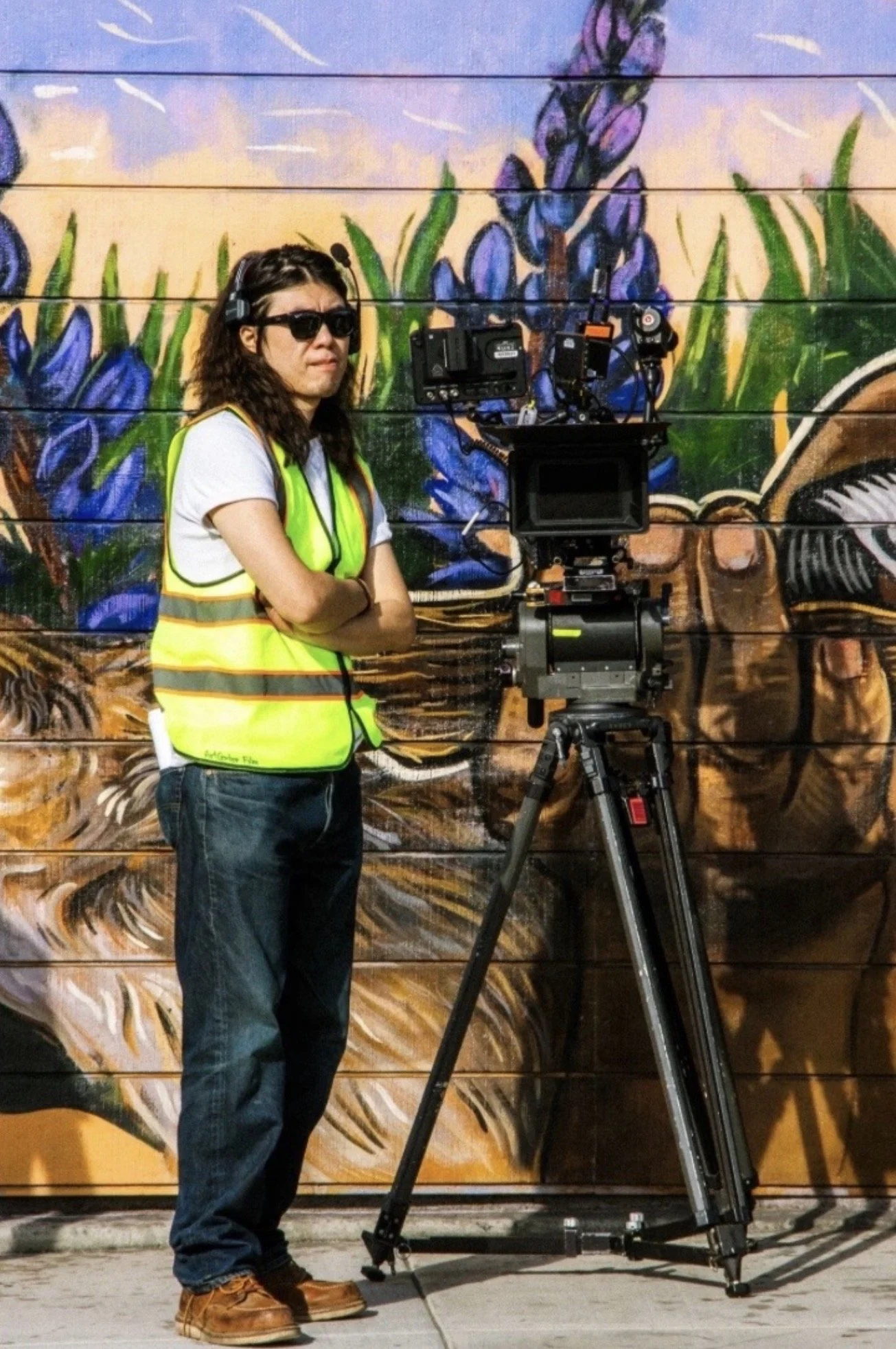
Syd Shen on set.