* As a part of our campaign to raise awareness about child exploitation, interviews with the cast and crew of ‘All Hail The King’ will be released until the campaign ends 11.12.2027 *
A cinematographer, also known as a director of photography, is the person responsible for translating a film's story into visual language on set. They shape how a movie looks by making decisions about camera selection, lens choice, framing, camera movement, exposure, and lighting while working to serve the tone and emotion of each scene.
They usually lead the camera and lighting departments, working with the camera operators, gaffer, and grip team, and coordinate closely with the director, production designer, costume department, and colorist in post. Their goal is to capture images that feel both authentic and cinematic, supporting the story without pulling the audience out of it.
Wayne Zhang is a cinematographer whose work moves between independent films in the United States and feature productions in China. He approaches cinematography with an understanding of storytelling, atmosphere, and composition, drawing on both its technical and artistic sides.
His work focuses on using light, contrast, color and camera movement to communicate emotion and meaning while collaborating closely with directors, designers, and the wider production team.
Interviewer: What pulled you toward cinematography in the first place?
Wayne Zhang: For me, it was always about storytelling. When I watched movies, I found myself most attracted to the visual side of filmmaking. I wanted to use visual language to tell stories. I enjoy both the more technical side of cinematography and the artistic side. To me it's about using images to communicate emotion and meaning.
When I first started, I wanted to become a director, but struggled to deal with screenwriting. Even as a kid, around nine years old, I loved taking pictures. Eventually I realized cinematography combined both photography and movie-making. I could tell stories through images, and I found that I really enjoyed creating visual compositions. So I decided being a cinematographer was the path I wanted to follow.
Eventually, I studied television broadcasting for my undergraduate degree. After that I spent a year at Vancouver Film School before going to ArtCenter College of Design’s MFA program for my graduate degree.
Interviewer: How different was studying broadcasting compared to Vancouver Film School?
Wayne Zhang: Broadcasting focused mostly on television news and TV programming. We did work with cameras and lights but Vancouver Film School was completely different because it was centered on making films. It was very hands-on. We learned how to build contrast-filled lighting setups, high-key and low-key lighting, and how light can communicate emotion and support the story. We learned operate cameras, and create cinematic images.
The instructors taught me a great deal.
Interviewer: When you first read the script for All Hail the King, and you imagined the visual language of the film, was it similar to what audiences will see now?
Wayne Zhang: Oh yes, I think it's very similar. The film has a strong film noir influence. And even though the story is grounded in reality because of the criminal case and the semidocumentary of it all, there are many genre elements throughout the narrative.
At times, it’s a journalistic thriller, others it’s more about the interpersonal drama, at times it feels like a horror film. I wanted the cinematography to reflect that. It needed to feel authentic while also embracing the power that the tools of cinematography gives us, so we went with a darker, more stylized visual language with low-key lighting and strong contrast.
In many ways, it still feels like the other films Andre and I made. (Wayne Zhang and Andre Machado collaborated on multiple projects through the INSIDIOUS FACTORY FILMS brand, including ‘The Unforgivable Act’ (2023),‘Hatman’ (2024) and ‘Let Me Ask You Something’ (2025). You can take a look at them here.)
Interviewer: What camera did you choose for principal photography on the narrative sections, and why?
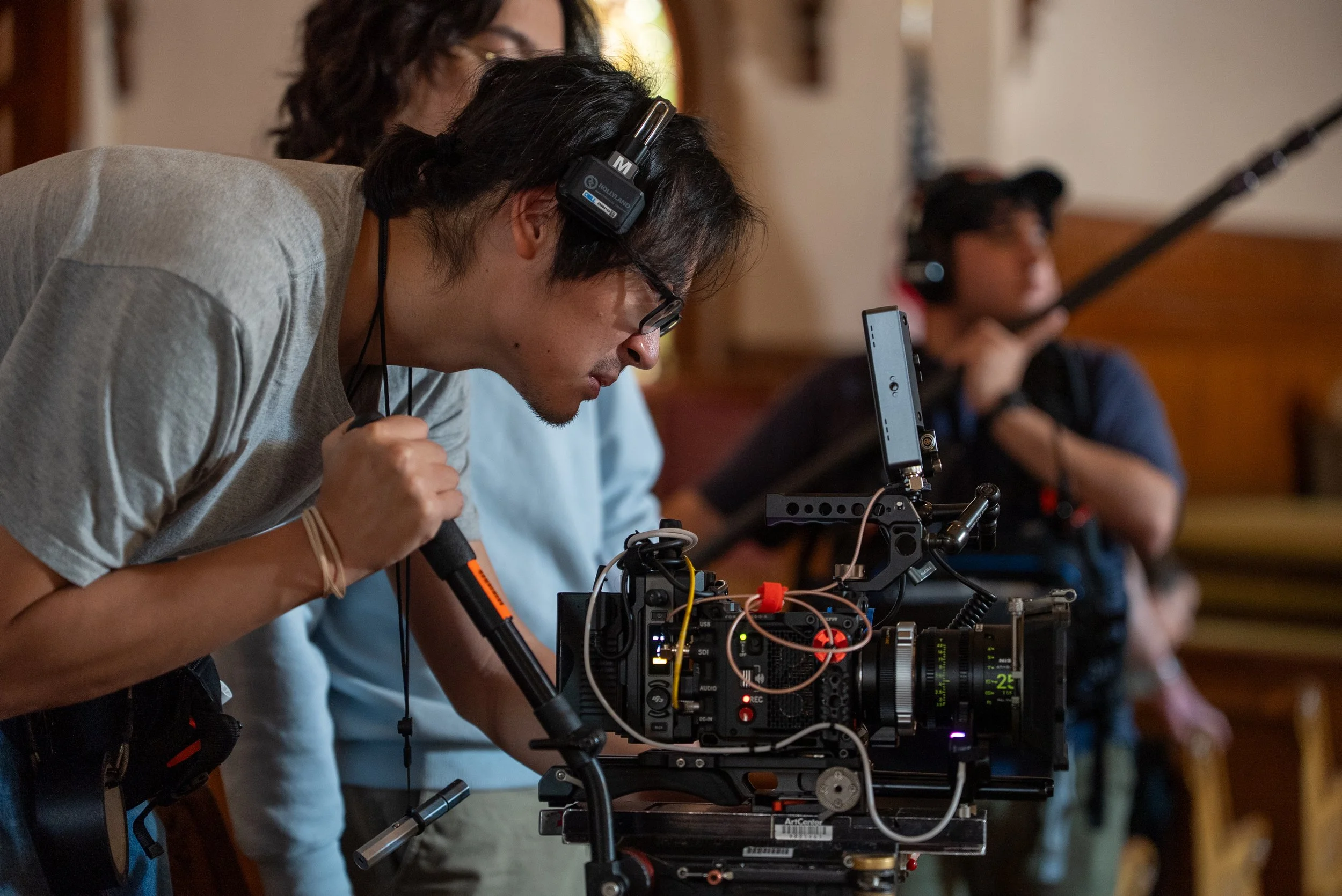
Wayne Zhang: We used the DJI Ronin 4D for most of the narrative section of the film.
Interviewer: What made you choose that camera specifically?
Wayne Zhang: Efficiency was the biggest reason. The Ronin 4D gave us a lot of flexibility. We could move quickly between stabilized handheld shots, tracking shots, and movements that looked almost like they were done on a dolly. It’s a great camera. It allowed us to achieve cinematic camera movement without slowing production down. As we were making this film independently and under a very demanding schedule, it absolutely was the right choice.
Normally I use RED or ARRI cameras as the main cameras and the Ronin 4D as a B camera. RED has certain advantages in color science and dynamic range. But for All Hail the King, efficiency was the priority. It’s funny because on this project the Ronin 4D became the A camera and the RED became the B camera. (Multiple scenes in the narrative and documentary sections were filmed using a RED KOMODO-X).
One of the inspirations for ‘All Hail The King’ was Michael Mann’s work. Some of those films show how digital cinematography creates its own powerful cinematic language. Our DJI camera produced some beautiful images.
Interviewer: Much of All Hail the King consists of interview conversations. How different is your approach when shooting two people talking in a room compared to larger cinematic set pieces?
Wayne Zhang: Balance comes to mind. Even when you have two people talking, I still want the film to carry a certain mood and tone while remaining grounded in reality. You have to balance naturalism with carrying a style. It's about making everyday conversations feel cinematic without becoming unrealistic.
Interviewer: How important are costumes, production design, and makeup to your work as a cinematographer?
Wayne Zhang: In some ways they're even more important than cinematography itself because they make the world believable. If the costumes, locations, and production design don't feel authentic, audiences won't believe the story. Production design, costumes and make up are what gives the cinematographer something meaningful to capture.
Interviewer: How important is deciding on a color palette before production versus discovering it while shooting?
Wayne Zhang: Planning ahead is very important because it makes the film feel visually consistent and professional. On independent productions we don't always have the time or budget to refine every detail, but we still spent a long time discussing the visual concept before filming.
You have to be intentional with what you’re visually communicating to an audience. With this film, production design, cinematography, props, and color all worked together to support the same vision.
Interviewer: After working with many directors, especially film students, what are some of the biggest mistakes you've seen directors make? And what mistakes do cinematographers make?
Wayne Zhang: Actually, I wouldn't really call them mistakes. They’re more like… regrets, if that makes sense? You learn not to make certain choices with experience. Every single film I’ve ever seen has things that could have been better.
For me, over time, I learned a lot of it is about having enough preparation. Knowing what you’re doing. Having more time for location scouting always helps you build stronger lighting plans. But independent films don't always have that luxury. I think if you ask every cinematographer in their world about their project, they will all say “I wish we had more time and money”.
Interviewer: When you think back on All Hail the King, what memories come to mind first?
Wayne Zhang: It's very personal because it was my last project in California. It's a really happy memory. We weren't making this film just because it was a school assignment. We made it because we genuinely love filmmaking. The director and I and a lot of the crew members had worked together before. The crew enjoyed working together as friends, and that collaboration made the experience very special. It felt like everyone was giving it their all.
Interviewer: Do you have a favorite shot in the movie?
Wayne Zhang: Yes. It's one of the shots in the conference room scene. It’s actually from the first day of shooting. There’s this over-the-shoulder shot behind Calvin, pointing at actor Ray Buffer. I really like that composition. It's very organized visually, and the strong contrast worked really well. Our production designers, Syd Shen and Jane Hamor did a great job at making the most out of that location.
Interviewer: You've worked on many projects in China, including feature films. How does filmmaking there compare with making independent films in the United States?
Wayne Zhang: The American film industry is much more organized because of the union system and the professional infrastructure. China doesn't have the same traditions in that regard. In many ways, there’s a lot more chaos. On the other hand, filmmaking in China is much less expensive. Renting cameras, hiring equipment, and putting together productions is significantly cheaper than it is in the United States, especially for independent filmmakers.
It's also easier to obtain permits in many situations. For independent productions, filming can often be much easier because the overall costs are lower.
Interviewer: What advice would you give your younger self? And what advice would you give someone who wants to become a cinematographer?
Wayne Zhang: Be patient. That's the most important thing. Be patient on set, be patient in daily life, and be patient while building your career. There are times when you won't have much work, but you should keep learning, keep watching films, and keep improving your craft. Stay passionate and trust the process. Patience is one of the most important qualities a cinematographer can have.
You can check out some of Wayne’s work here.
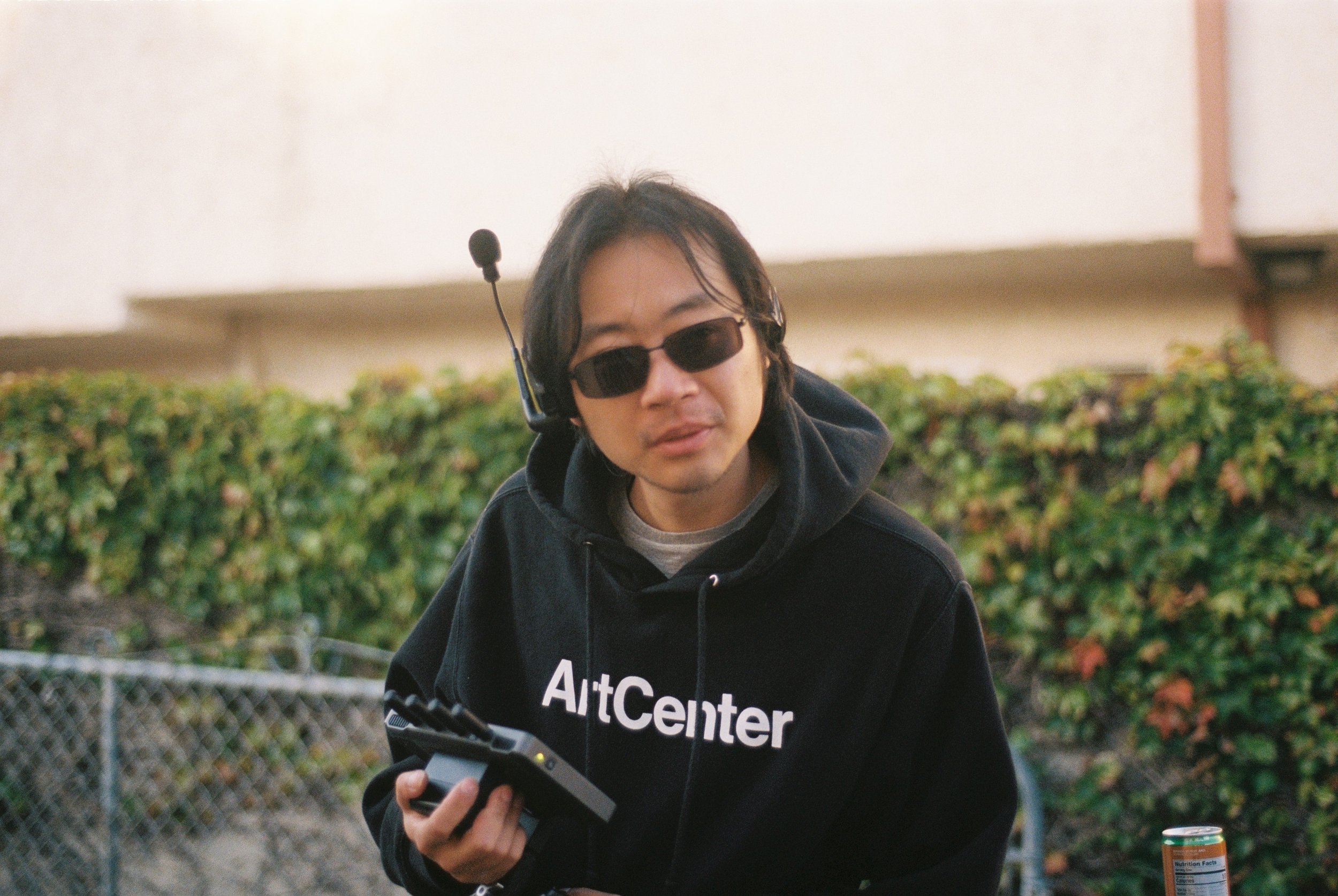
WAYNE ZHANG on set.
